
Research at Materials Science & Engineering
Engineering
Design

In materials design, the goal is to select and optimize materials for specific applications based on their properties, performance requirements, and manufacturing constraints. This process involves understanding the relationship between a material’s atomic structure and its macroscopic behavior. Design is a highly interdisciplinary field that combines principles from chemistry, physics, and engineering to create materials with tailored properties, such as strength, conductivity, flexibility, or bioactivity. Modern design also incorporates computational methods, including modeling and simulations, to predict material behaviors and accelerate the development of innovative materials for use in industries like aerospace, automotive, healthcare, and energy.
Research Topics
- Nanomaterials development for carbon capture and storage
- Synthesis and modification of solid sorbents for carbon capture
- Multi-scale process modeling for material optimization
- Nanoengineering of functional optical materials
Synthesis

Synthesis is the process of creating new materials with controlled structure and properties at the atomic, molecular, or bulk scale. Researchers explore a wide range of techniques—such as chemical vapor deposition, solution processing, solid-state reactions, and molecular self-assembly—to design materials with precision. Innovations in synthesis are central to discovering materials with novel electronic, optical, or mechanical behavior. By tailoring how atoms and molecules are arranged, scientists can influence everything from conductivity to reactivity.
Research Topics
- Self Assembly
- Electrochemistry
- Single-atom catalysts
- Plasma-synthesis of nano- and micro-powders
- Inorganic synthetic chemistry
Characterization
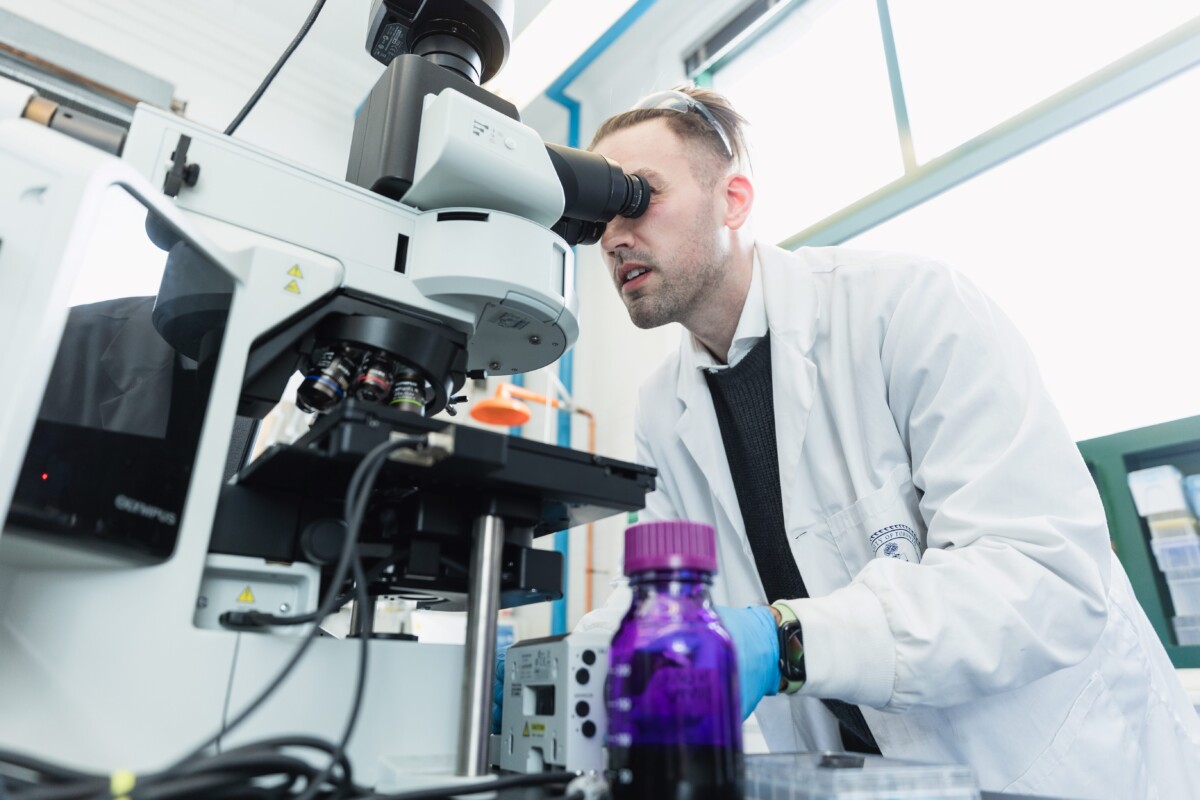
Characterization in materials engineering involves analyzing a material’s structure, composition, and properties across multiple scales. Techniques like microscopy, spectroscopy, and diffraction help reveal how internal features influence performance and failure. This process is essential for understanding degradation, validating new materials, and linking synthesis and processing to real-world function. Facilities like OCCAM support cutting-edge research through advanced instrumentation and expert analysis.
Research Topics
- Novel multi-dimensional micro-optical spectroscopies and data fusion
- In situ vibrational and X-ray spectroscopies
- In situ spectroscopies for optical materials discovery
Forensics

Forensics in materials engineering involves the scientific investigation of material failures, defects, or unexpected performance to determine root causes and prevent future occurrences. This field applies principles of materials science, characterization techniques, and analytical methods to examine evidence from failed components, structures, or products. Forensic materials engineers analyze fracture surfaces, identify corrosion mechanisms, detect material contamination, and reconstruct event sequences to understand why a material did not perform as intended. The insights gained are crucial for improving product design, manufacturing processes, safety standards, and resolving legal disputes
Modeling

Modeling in materials engineering employs computational techniques and theoretical principles to simulate and predict the behavior of materials at various scales, from atomic interactions to macroscopic performance. This involves developing, implementing, and applying mathematical models as software to understand and calculate structure-property relationships, predict material responses to external stimuli (like stress or temperature), and optimize compositional and materials processing parameters. By simulating complex phenomena that are difficult or expensive to study experimentally, materials modeling accelerates the discovery, and development, and optimization of new materials and processes and provides critical insights for solving engineering challenges. It is an indispensable tool for designing advanced materials with tailored functionalities and efficient materials processes for diverse applications.
Research Topics
- Intelligent Process Modeling and Optimization
Processing & Manufacturing
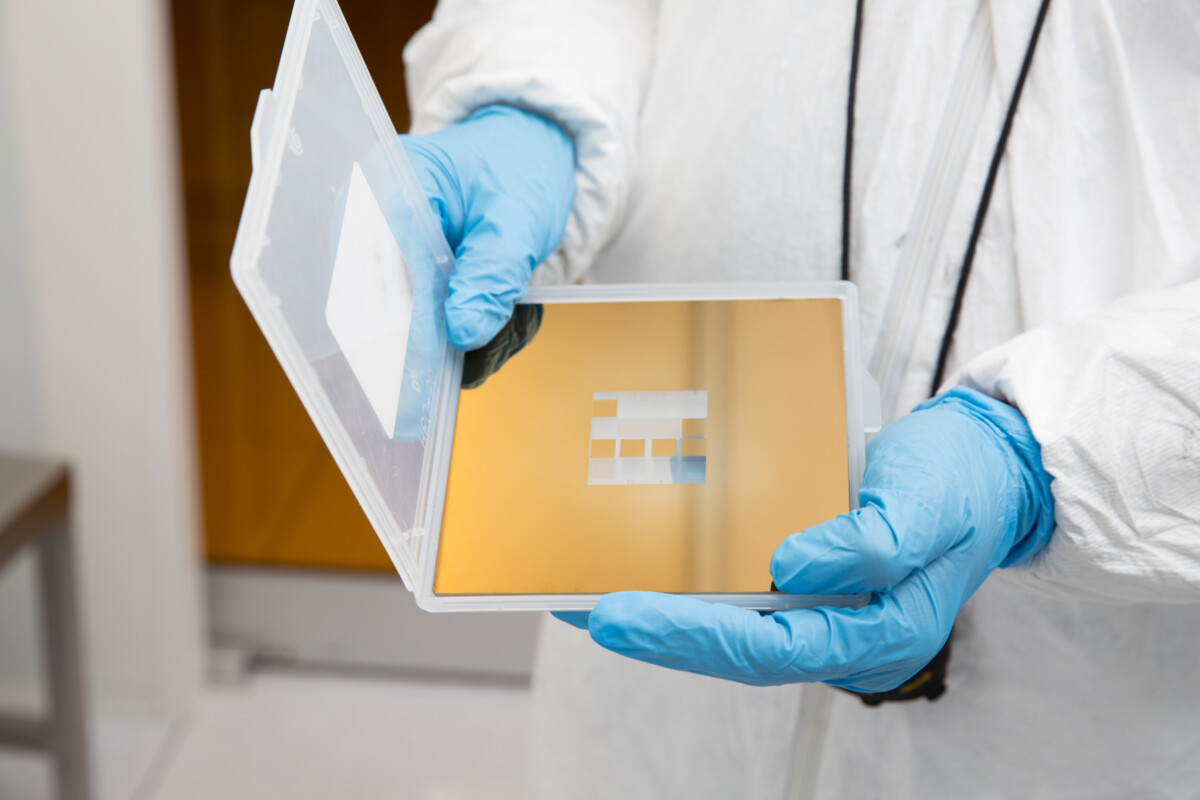
Processing involves transforming raw materials into usable forms through techniques like melting, casting, sintering, extrusion, and additive manufacturing (3D printing). It plays a critical role in defining a material’s structure, performance, and scalability. Research focuses on optimizing these methods to enhance properties like strength, toughness, and thermal stability. Innovations include low-energy processing, microstructure control, and advanced manufacturing approaches such as additive and subtractive fabrication.
Research Topics
- Additive Manufacturing
- Micro and Nano Fabrication
- Sustainable process metallurgy
- Thermal spray processes and coatings